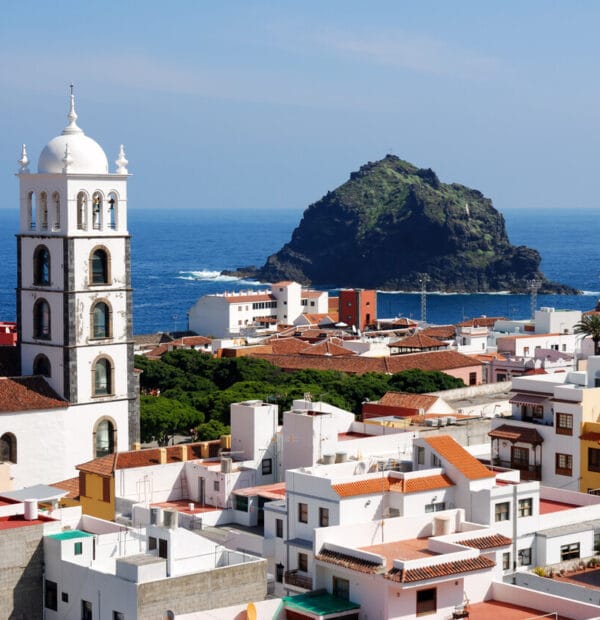
The island of Tenerife never ceases to surprise us with its diversity. This time we will visit the pyramids of Güímar, which are surrounded by countless unanswered questions. They are a mystery not only to the general public, but also to archaeologists themselves, who still do not know who built them and for what purpose.
Güímar: Home of the Original Inhabitants, Pyramids and Mummies
To visit this place, we must head to the northern part of the island, approximately 30 km from Santa Cruz de Tenerife. The area of Güímar is close to the coast in a wine-growing area.
One of its features is the Barranco de Badajos Gorge, the most important prehistoric site in Tenerife, which attests to the life of the Guanches, the original inhabitants of the island. These natives themselves are one of the mysteries of history, as no one knows for sure where and how they came to the island. Some theories suggest that the Canary Islands may have been the mythical Atlantis, while others point to evidence that the Guanches were related to the Berbers of North Africa. Although the latter theory seems more likely, it is often questioned due to the physical appearance of the Guanches. They were tall, fair-skinned, often blond or red-haired with blue eyes. Because of their life in the caves, they were also physically fit, yet highly intelligent. They had a friendly nature, liked to compete, gamble, and were also fond of dancing. They cared very much about family relationships.
However, the Guanches have made their mark on history mostly through their funeral rituals. Following the Egyptian model, they practiced mummification of their deceased loved ones. The bodies were placed on stone benches, the intestines removed, and the body was bathed twice a day in cold salt water. They took special care of the ears, nostrils and fingers, which were the most fragile parts of the body. The body was then rubbed with a mixture of goat fat, aromatic herbs, crushed pine bark, resin, fern powder and pumice. Afterwards, the body was exposed to the sun for two weeks, a time of mourning for the relatives. After mummification, the body was wrapped in sheep and goat skins, possibly marked with an identifying mark, and taken to the burial cave. Several of these mummies have been found in the aforementioned Barranco de Badajos ravine.
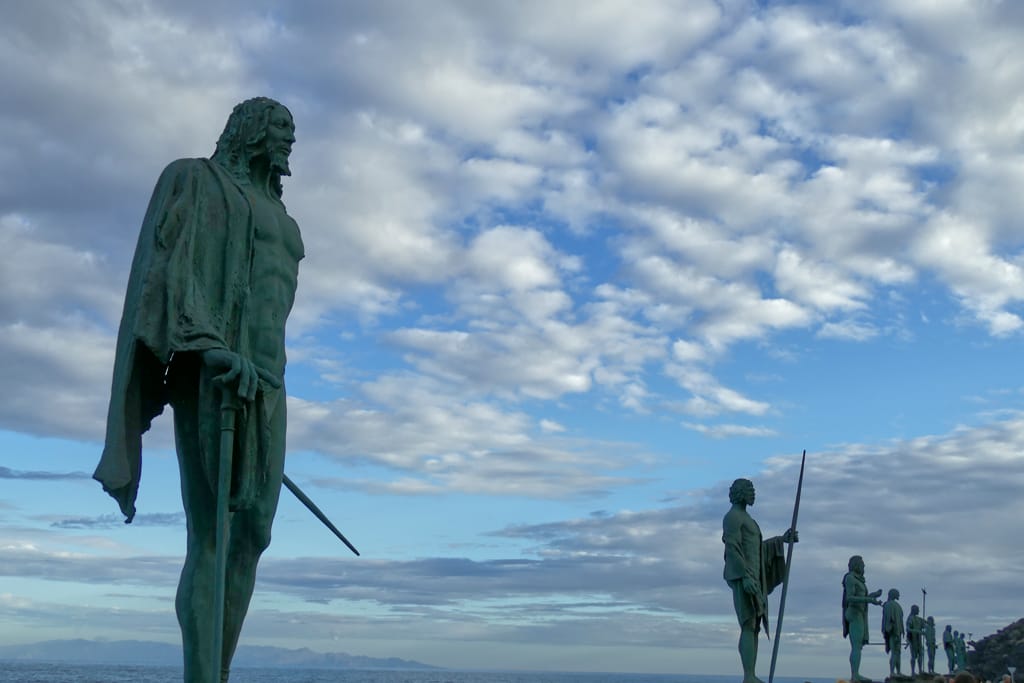
Although the Guanche race died out after the Spanish conquest of the island in the 15th century, their spirit, hospitality and passion are still present on Tenerife. But is that really the only thing the Guanches left behind?
The Search for the Pyramids
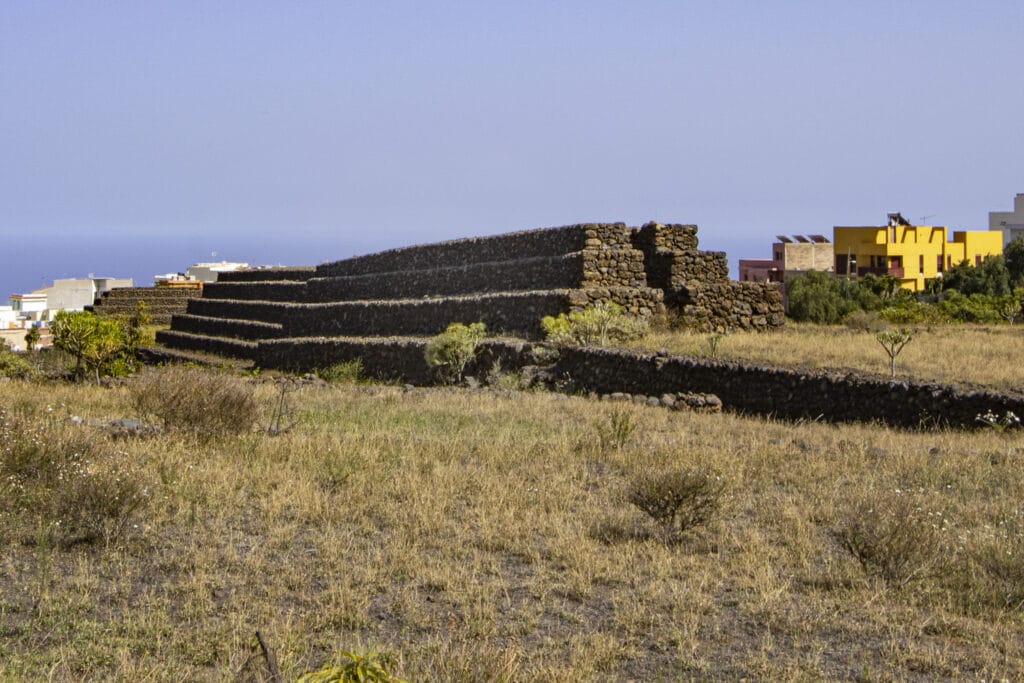
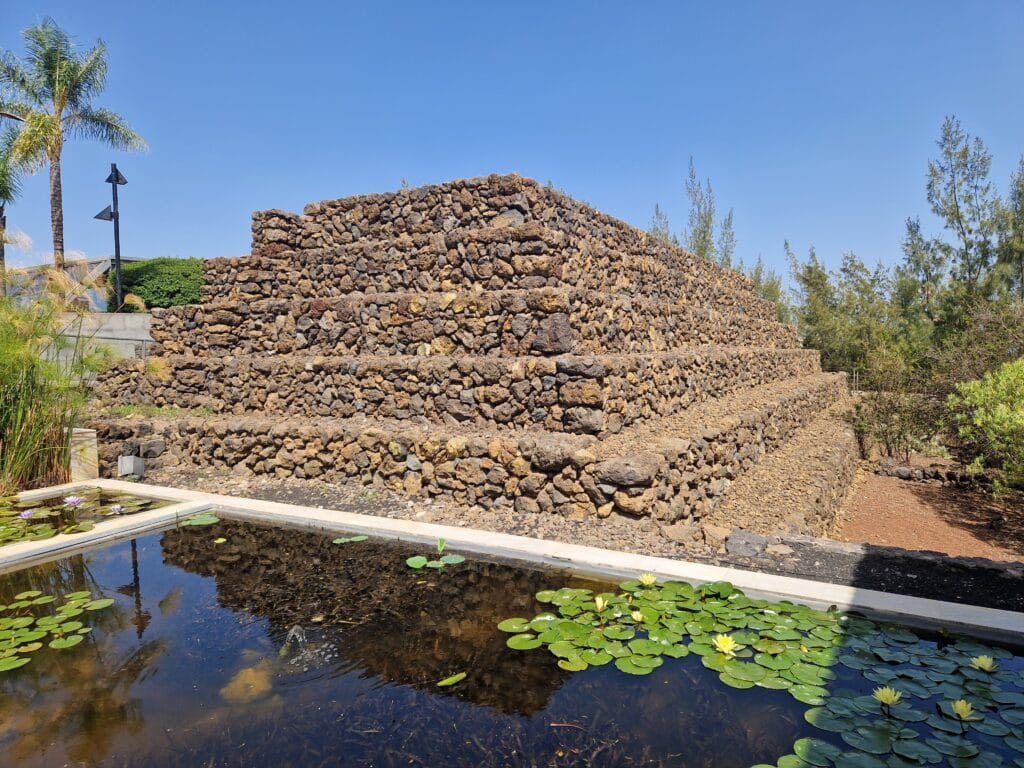
In 1990, adventurer Thor Heyerdahl came across an article about the possible discovery of pyramids up to 12 metres high in the Canary Islands. These stepped formations had long been thought to be stones that local farmers had casually piled up, a common practice on the island. But Heyerdahl’s trained eye immediately saw something far more significant in these structures. The similarity to Egyptian and Central American pyramids led him to the theory that Tenerife served as a crossroads of civilisations. Although researchers rejected this theory, Heyerdahl decided to embark on his own research.
The main evidence of the pyramids’ significance for him was their location and orientation. All six stepped formations were rotated so that when climbing the stairs on the west side at the winter solstice, the rising sun was directly in sight. From the top of the tallest pyramid, it is also possible to see a double sunset during the summer solstice, when the sun first sets behind the top of the mountain, then re-emerges from it and sets behind the adjacent peak. In addition, the stones have been polished in several places. All of this contributed to Heyerdahl’s belief that the pyramids served as a ceremonial site. He considered the original Guanche to be their builders. During the 1990s, archaeological excavations were carried out at the site to get to the bottom of the mystery. The work revealed that there were artifacts from the Guanche period beneath the surface of the pyramid. This suggests that they were buried there later, by subsequent inhabitants of the island, pushing the age of the pyramids to more of a post-19th century period and supporting the theory that the construction was done by Christians to better determine the time.
Visitor Centre and Museum
Thor Heyerdahl devoted a significant part of his life to the search for the pyramids. He moved to Tenerife himself to continue his research. He believed in his theory about the construction of the Guanche pyramids until his death. In 1998, with the financial help of businessman Fred Olsen, he built a visitor centre for the public. He created an ethnographic park on an area of 65,000 m² to study and protect this archaeological site, whose existence was threatened by urban planning.
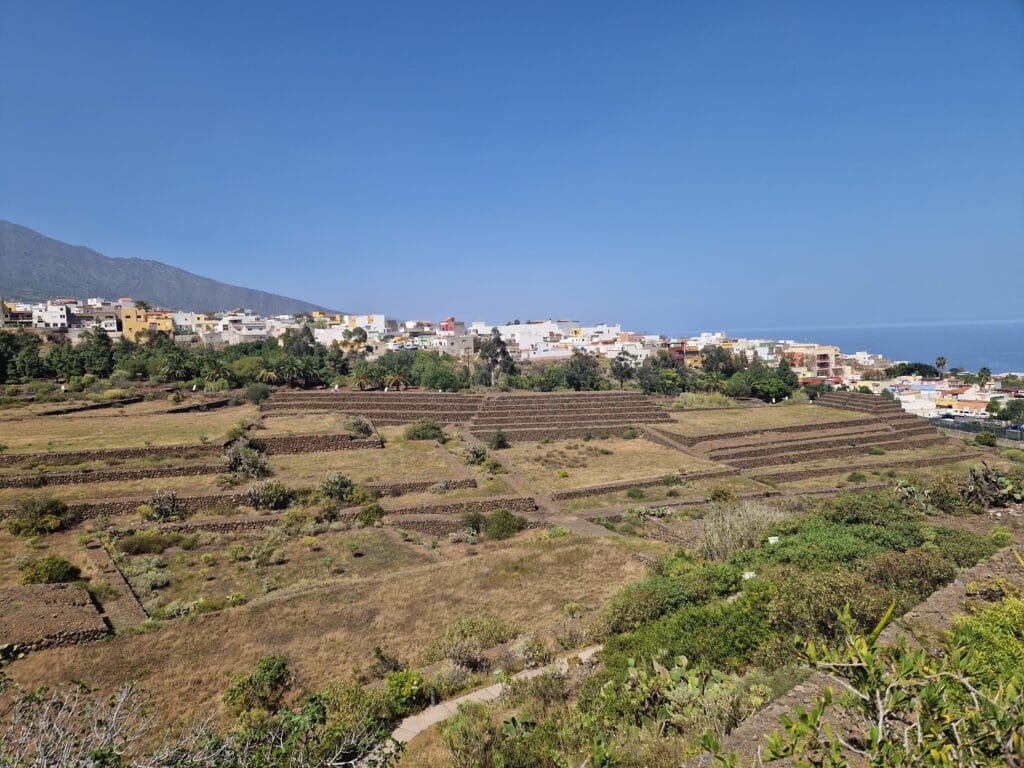
In the complex you can admire the pyramids and learn about Heyerdahl’s expeditions and his research. One exhibit features a model replica of the ship Ra II, made of reeds and papyrus, on which he set out to cross the Atlantic in 1970. The visitor centre also includes a botanical garden.
How to Get to the Pyramids
The Pyramids of Güímar are open daily from 10:00 to 16:00 (except January 1 and December 25). There is a option of a basic ticket, which includes a tour of the pyramids and the museum, or an extended ticket with access to the botanical gardens or a guided tour. The tour lasts between one and two hours depending on the chosen tour.
Güímar can be reached by car by turning off the main TF-1 road at exit 22. There is also a car park. The site can also be conveniently visited by public transport. From Santa Cruz, lines 120 and 128 run here. From the southern part of the island, you will have to take line 111 first and then change to line 120 to Güímar.
Good to Know Before Your Visit
Pet friendly – You can bring your four-legged friend with you on your visit.
Accessible – The park is accessible to people with reduced mobility and provides accessible routes and other services, such as audio guides.
Refreshments – There is a café on site where you can relax after your tour. Proper clothing – As this is an outdoor museum and botanical garden with several trails, comfortable shoes, sunscreen and a hat are recommended.
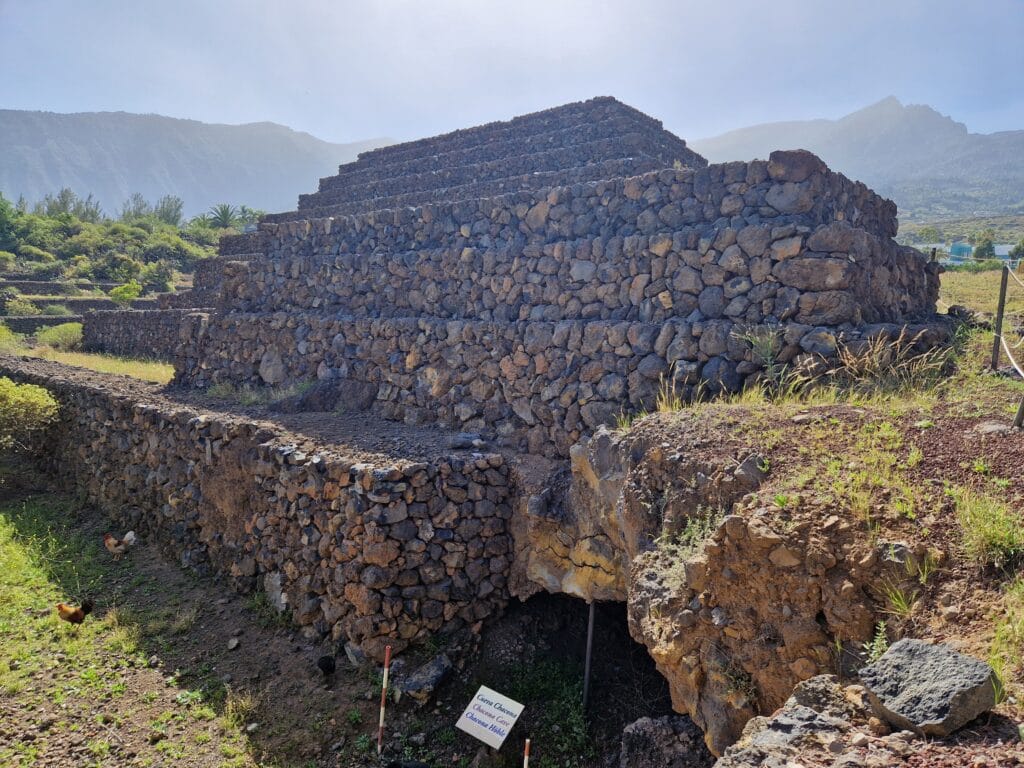
The visitor centre does not impose one correct theory on anyone. On the contrary, in accordance with Thor Heyerdahl’s wishes, it encourages visitors to form their own opinion on this mystery.
What do YOU think about this mystery? Share your thoughts with us on our social media!
Frequently Asked Questions (FAQ)
When were the pyramids of Güímar built?
According to archaeological findings, the construction of the pyramids is estimated to have begun in the 19th century. However, many argue that they were built much earlier in the time of the Guanches, the original inhabitants of the Canary Islands.
Where are the pyramids in Güímar?
The pyramids are located on the island of Tenerife, approximately 30 km from Santa Cruz de Tenerife and 60 km from Costa Adeje, in the town of Güímar.
How to visit the pyramids in Güímar?
The pyramids can be reached by car by turning off the TF-1 road at exit 22. There is also a public transport route to the pyramids. From Santa Cruz, lines 120 and 128 run here. From the southern part of the island, you’ll need to take line 111 first and then change to line 120 to Güímar.
What material are the pyramids in Güímar made of?
The pyramids are carefully stacked side by side without the use of mortar, they are fragments of lava that have been partially worked.
How big are the pyramids at Güímar?
The pyramids consist of six rectangular structures, the tallest of which measures 12 metres. They are also oriented towards the sunset during the summer solstice.
What to take with you when visiting the pyramids in Güímar?
It is recommended to have comfortable shoes, sunscreen, a hat and appropriate outdoor clothing given the weather.
What is located at the pyramids of Güímar?
In addition to the pyramids themselves, you can find a visitor centre with a museum, an exhibition about the adventurer Thor Heyerdahl, a botanical garden, an educational exhibition about plastics in the oceans and a café.
How much does it cost to visit the pyramids in Güímar?
The price depends on the option you choose. The basic ticket costs €12.50 and includes a visit to the pyramids, the museum and other smaller exhibitions. The extended ticket (€18) also includes a visit to the botanical gardens. A guided tour costs €22.50 (prices are as of September 2024).
When are the pyramids of Güímar open?
The Pyramids of Güímar are open daily from 10:00 to 16:00 (except 1 January and 25 December). It is not necessary to book tickets online to visit.