If there is one place on Tenerife where faith, history, and local identity truly meet, it is Candelaria. Often overlooked by visitors rushing between beaches or Mount Teide, Candelaria is one of the most important cultural and religious towns in the Canary Islands. It is here that you will find the island’s patron saint, the famous Black Madonna, and experience some of the largest and most emotional celebrations on Tenerife.
This article is a complete guide to Candelaria — its history, legends, festivals, beaches, food scene, and practical travel tips — written to help you understand why this town matters so deeply to locals and why it deserves a place on your Tenerife itinerary.
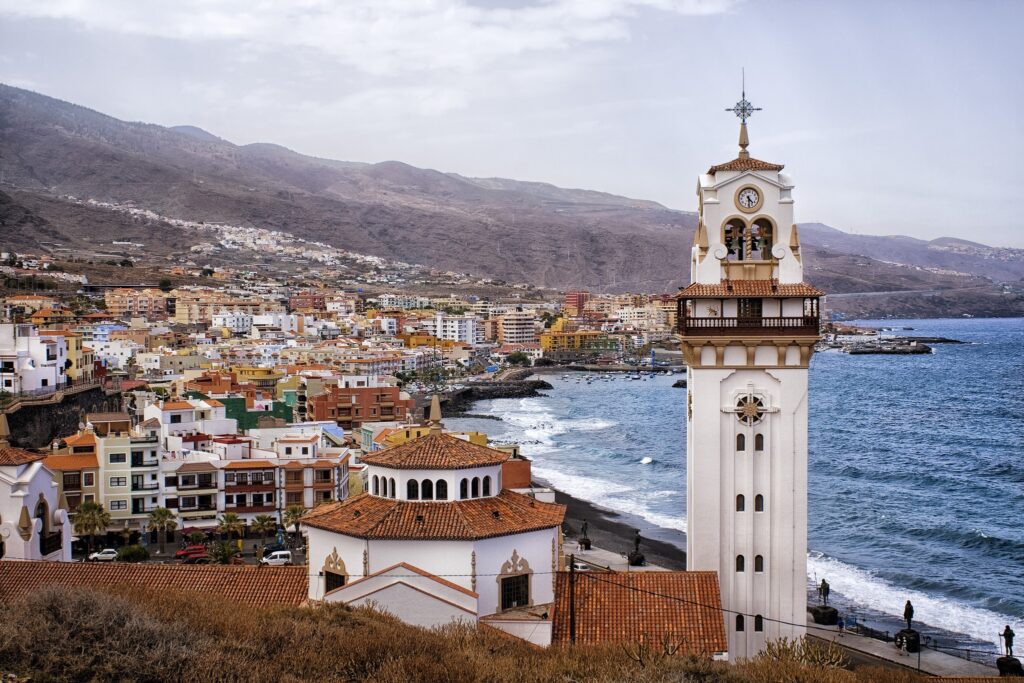
Where Is Candelaria and Why Is It Important?
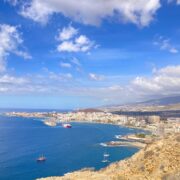
Candelaria lies on the east coast of Tenerife, about 20 minutes south of Santa Cruz and roughly 40 minutes from Tenerife South Airport. Unlike many tourist-heavy resorts, Candelaria has remained authentically Canarian, with daily life revolving around local families, fishermen, and pilgrims.
What makes Candelaria truly special is its role as the spiritual center of Tenerife. It is home to the Basilica of Our Lady of Candelaria, where the island’s patron saint has been venerated for centuries.
The Legend of the Black Madonna of Candelaria
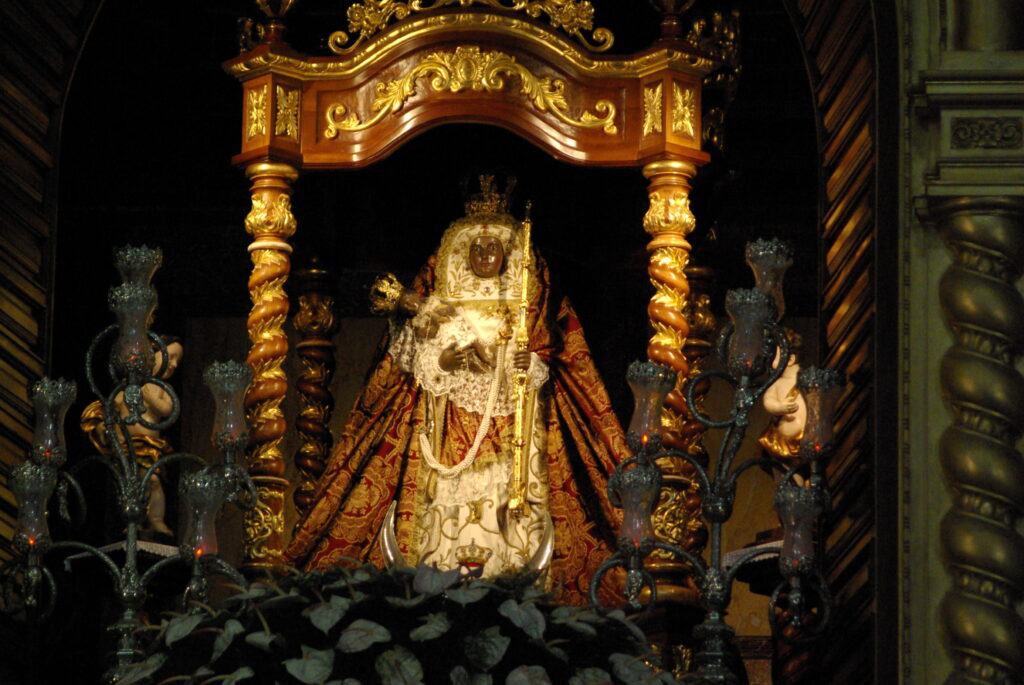
At the heart of Candelaria’s identity stands Virgen de Candelaria, the Black Madonna, patron saint of the Canary Islands.
The Guanche Discovery
According to legend, the statue was discovered before the Spanish conquest, around the late 14th century, by the Guanche people, the original inhabitants of Tenerife. Two Guanche shepherds reportedly found a mysterious statue near the coast. When one tried to throw a stone at it, his arm became paralyzed; when the other attempted to strike it, he was injured. Terrified, they realized the figure possessed divine power.
At that time, the Guanches did not know Christianity, yet they revered the statue as sacred and brought it to their ruler. Only later, after the arrival of the Spanish, was the figure identified as the Virgin Mary.
A Living Tradition: The Bearers of the Virgin
One of the most remarkable aspects of devotion to the Virgin of Candelaria is the honor of carrying her statue during major ceremonies.
This role is not random. The right to carry the Virgin is traditionally inherited, passed down through families over generations. Being chosen as one of the bearers is considered an extraordinary honor and responsibility, deeply respected within the community. It is not only a physical task but a spiritual one — many bearers prepare for years, both mentally and emotionally.
When the Virgin is carried outside the basilica, the atmosphere becomes intensely emotional. Silence, prayers, and applause mix together in a moment that many locals describe as one of the most powerful experiences of their lives.
Major Festivals and Celebrations in Candelaria
Candelaria hosts two of the most important religious festivals in the Canary Islands.
February 2 – Feast of the Virgin of Candelaria
This is the official religious feast day, celebrated with:
- Masses and church ceremonies
- Processions through the town
- Pilgrims arriving from all over Tenerife
The atmosphere is reverent and deeply spiritual, attracting believers from across the archipelago.
August 14–15 – The Great Pilgrimage (Romería)
The August celebration is the largest and most spectacular event in Candelaria:
- Thousands of pilgrims walk for hours — some all night — to reach the basilica
- Many wear traditional Canarian clothing
- Folk music, singing, and shared food fill the streets
- On August 15, the Virgin is carried in a grand outdoor procession
This event is not just religious — it is a cultural and emotional gathering that unites generations.
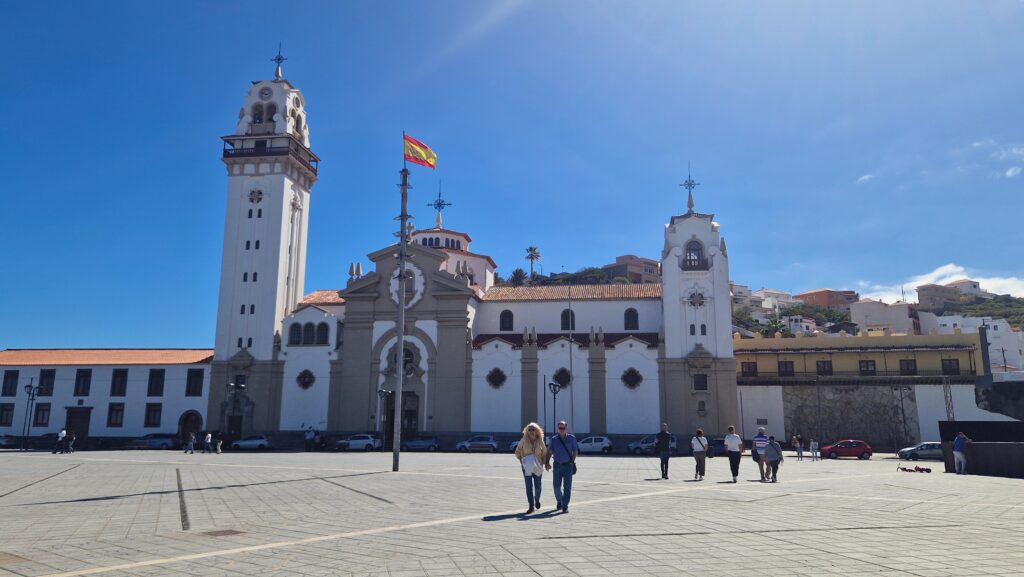
The Basilica and Plaza de la Patrona de Canarias
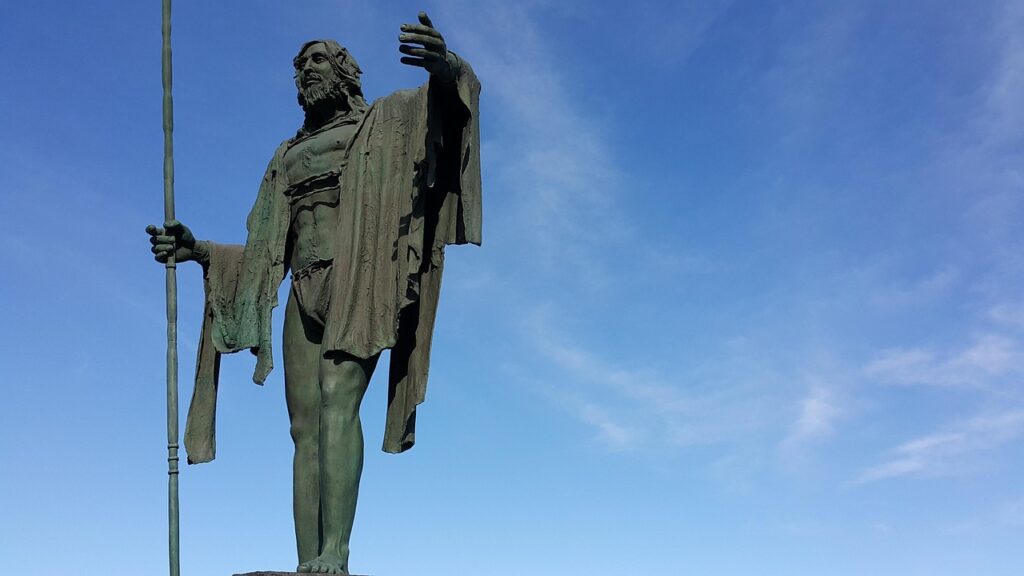
The basilica dominates the seafront and opens onto a wide square featuring monumental statues of the Guanche kings (menceyes), standing proudly. These statues symbolize the deep link between pre-Hispanic Tenerife and Christianity, a connection unique to Candelaria.
Inside the basilica, visitors can admire:
- The Virgin’s statue
- Maritime motifs reflecting Tenerife’s seafaring history
- A calm, contemplative atmosphere even during busy days
Beaches Near Candelaria
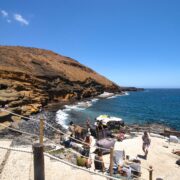
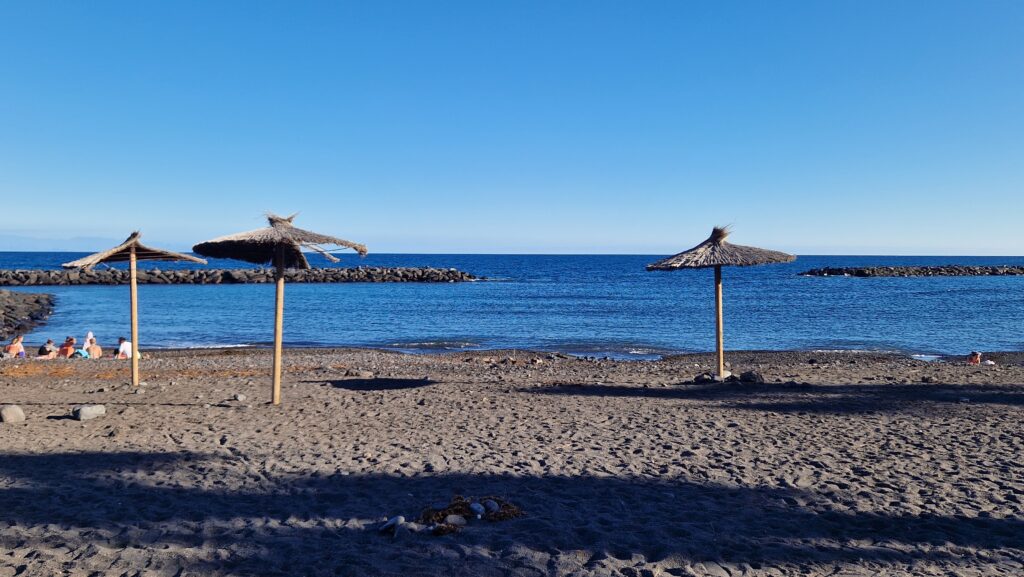
While Candelaria itself has volcanic beaches, the nearby coastline offers excellent swimming and spots.
Playa de El Cabezo in Puertito de Güímar
Just south of Candelaria lies Puertito de Güímar, a quieter coastal village with:
- Natural swimming pools
- Calmer waters for snorkeling
- A relaxed, local atmosphere
It’s an ideal spot for a peaceful afternoon by the sea.
What to See and Do in Candelaria
Beyond the basilica, Candelaria offers plenty to explore:
- Seafront promenade – Perfect for sunset walks
- Guanche statues – A powerful historical landmark
- Local markets and small shops – Authentic Canarian products
- Coastal paths – Scenic walks along volcanic shoreline
Candelaria is also an excellent base for exploring the nearby Güímar area and its natural landscapes.
What to Eat in Candelaria
Candelaria is well known for traditional Canarian cuisine, especially seafood.
Popular local dishes include:
- Fresh grilled fish (vieja, sardines, sama)
- Papas arrugadas with mojo sauce
- Goat meat (carne de cabra)
- Local desserts like bienmesabe
Most restaurants are located along the seafront promenade, offering ocean views and relaxed service. Dining here feels local, unpretentious, and authentic — a refreshing contrast to resort dining.
How to Get to Candelaria
By Car
- From Santa Cruz: ~20 minutes
- From Tenerife South Airport: ~40 minutes
Parking is available near the basilica and promenade.
By Bus
Candelaria is well connected by TITSA buses from Santa Cruz and other towns. It’s an easy day trip even without a car.
Why Visit Candelaria?
Candelaria is not about theme parks or luxury resorts. It is about identity, belief, tradition, and continuity. Visiting here helps you understand Tenerife beyond beaches and volcanoes — it reveals the island’s soul.
Whether you come for The Black Madonna, the powerful festivals, coastal walks and local food, or simply to experience real Canarian life, Candelaria leaves a lasting impression.
Frequently Asked Questions (FAQ)
Is Candelaria worth visiting?
Absolutely. It is one of the most culturally significant towns on Tenerife.
When is the best time to visit Candelaria?
August (for the pilgrimage) or February 2 for the official feast. Outside festivals, it’s peaceful year-round.
Is the Black Madonna visible to visitors?
Yes, she is displayed inside the basilica, except during certain ceremonies.
Can tourists attend the festivals?
Yes. Visitors are welcome but should be respectful — these are deeply religious events.
Are the beaches suitable for swimming?
Yes, especially Puertito de Güímar.