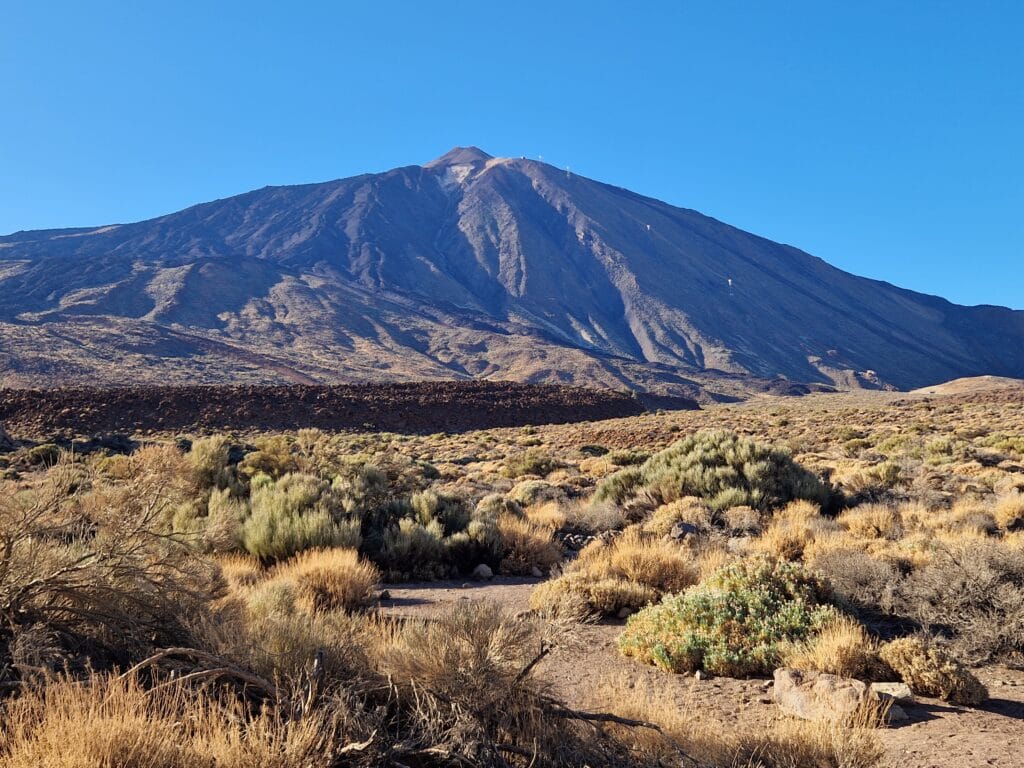
This mountain cannot be overlooked when visiting Tenerife. Its peak rises in the middle of the island and with a height of 3,718 m it is the highest mountain in Spain. This is Pico del Teide, a dormant volcano whose last eruption was recorded in 1909. Today, it is a popular tourist destination that should not be missed when exploring the island. Find out how to get to the top and what the visit involves in this article.
Why Visit Pico del Teide?
Approximately 150,000 years ago, a massive volcanic eruption occurred in what is now Tenerife, creating the Las Cañadas caldera at an altitude of 2,000 metres. These eruptions also formed the peaks of Pico del Teide and Pico Viejo. This area now forms the Teide National Park, which was designated a UNESCO World Heritage Site in 2007. It is one of the most visited national parks in Europe.
El Teide is the symbol of the whole of Tenerife. You can find it on the coat of arms of the island, in the emblem of the Cabildo de Tenerife and even on the flag of the island, where the white stripes represent the snow-covered peak of Teide during winter. The locals call the mountain ”Padre Teide”, reflecting its importance in the culture and daily life of the inhabitants.

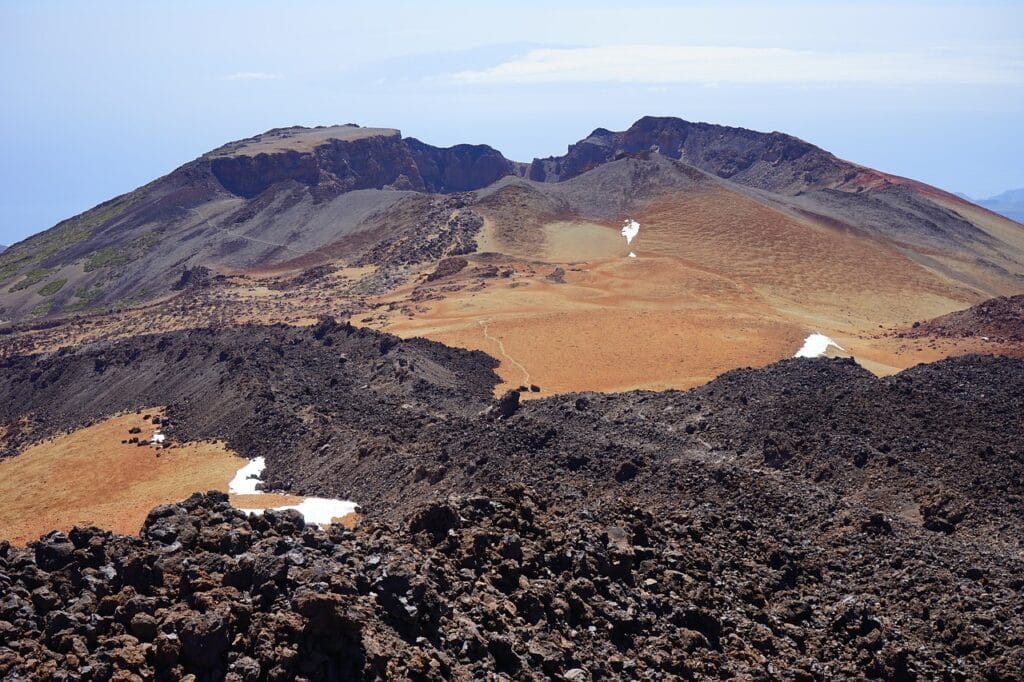
At the top of Teide, you’ll be greeted by a landscape full of lava formations and sulphur springs, which, thanks to its geological similarity, is used by scientists to test instruments for Mars exploration. In addition, you can enjoy stunning views of the ocean and snow-white clouds.
What to Look Out for Before Your Visit
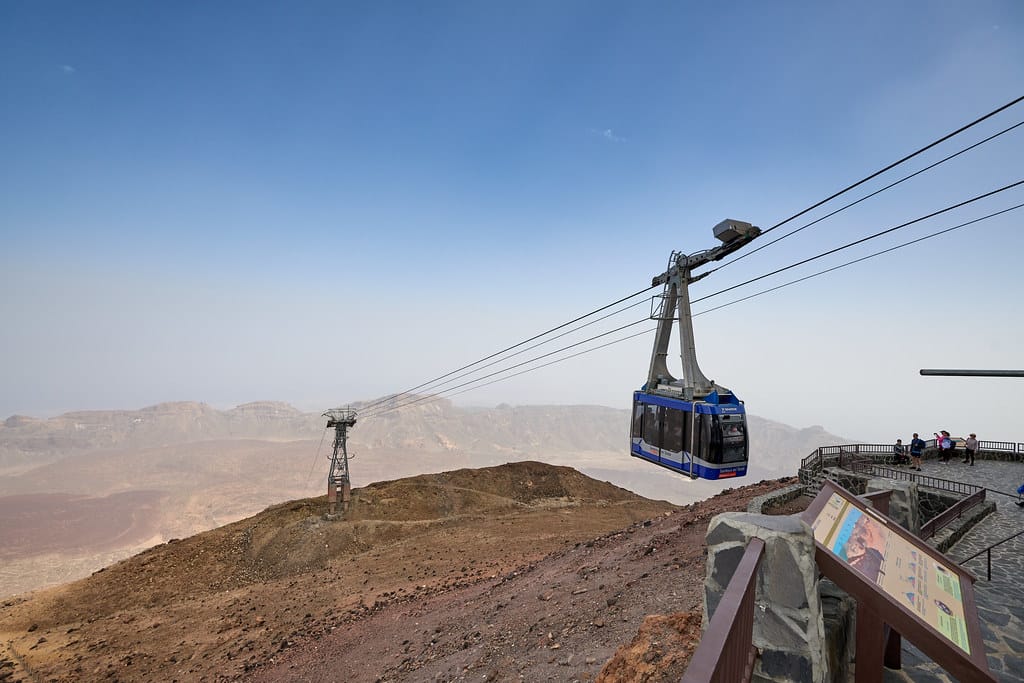
There is a cable car to the top of Pico del Teide, which takes you up to 3,555 metres. Tickets for the cable car can only be purchased online at this link. A one-way ticket costs €23, and a return ticket costs €41. You can also choose an option with audio commentary, a guided tour or a sunset cable car ride. It is recommended to book tickets well in advance, especially during the peak tourist season. Visitors can spend one hour at the top station of the cable car.
If you wish to hike from the cable car to the very top of the mountain, you must secure a permit in advance. This can be obtained on this website. The permit is free, but there are a limited number of places on any given day, so individual slots can sell out months in advance. With a valid permit, your stay at the cable car is extended to two hours. As of December 2024, it is now also necessary to arrange a permit for any trip to Teide, specifically hiking routes:
PNT 07+11: Montaña Blanca – Mirador de la Fortaleza – La Rambleta.
PNT 09: Teide – Pico Viejo – Mirador de Las Narices del Teide.
PNT 23: Los Regatones Negros.
Section of trail no. 28: Chafarí.
The permit can be obtained from the official website https://www.tenerifeon.es/. The weather on El Teide is unpredictable and can change quickly. If your visit is not subject to purchased lift tickets or permits, we recommend checking the current conditions here.
You can change the date and time of your cable car ride up to three times during the year, subject to availability. The cable car operates all year round but service may be interrupted in the event of bad weather. In this case, you will receive a notice with the possibility of a rescheduling or refund.
Due to the altitude, remember warm clothing, headwear and sunscreen. Also bear in mind that altitude sickness problems such as headaches or nausea may occur during the climb.
How to Get to El Teide?
There are several ways to visit this mountain. The easiest option is to take the aforementioned cable car. You can reach the lower station of the cable car by car or by bus number 342 from Los Cristianos and Costa Adeje, or by bus number 348 from Puerto de la Cruz. However, buses only run in the morning to the cable car and back in the afternoon.
If you want to walk to Teide, you can start from a place called Montaña Blanca. There is a small car park here, as well as a stop for both bus lines mentioned above. From here, you’ll climb approximately 9 km up a gravel and sometimes rocky path that will take you to the top station of the cable car. This is a fairly challenging route but requires no special equipment other than sturdy hiking boots. You can also use this route in the other direction if you decide to take the cable car upwards only. From the Montaña Blanca stop, it’s another 3km back to the cable car car park, and with a bit of luck you can catch bus number 342, 348 or 341 heading to the cable car station here.
The second starting point for climbing Teide is the rock formations of El Catedral near the visitor centre. This route passes by the Pico Viejo crater, among others. It is approximately 10 km long, with a less steep climb, but in places the path disappears between the rocks, making it harder to read and less frequented. As with the previous route, you can use this path for the return descent after the cable car exit. The visitor centre is 4.5 km from the cable car parking area, and there are buses that run during the day to make the return trip easier.
Remember that both trails require a valid permit as mentioned above.
Teide Astrological Observatory
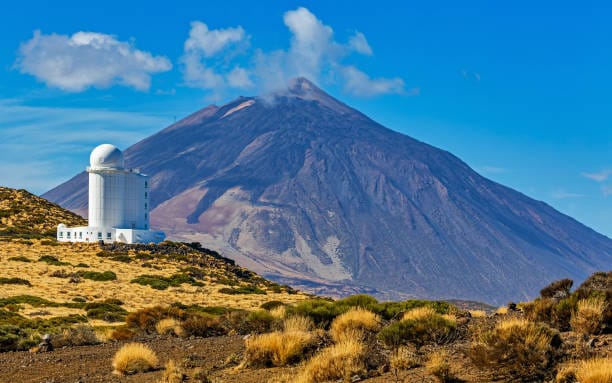
At the foot of the mountain, at an altitude of 2,400 m, there is also an observatory of the same name. Its position above the clouds provides ideal conditions for observing the sun and astronomical phenomena. There are several solar and night telescopes for this purpose. Entrance to the observatory costs €21 and you must arrive 30 minutes before the start of the tour.
Whether you decide to take a comfortable cable car ride, a more challenging hike, or visit the observatory, this destination will not disappoint. El Teide should not be missing from your itinerary.