When you think about how to get to Tenerife from mainland Europe, the idea of taking a ferry probably doesn’t come to mind first. Most travelers instinctively reach for flight search engines rather than ferry schedules. Yet, this often-overlooked way of reaching the Canary Islands has its own unique charm and practical advantages.
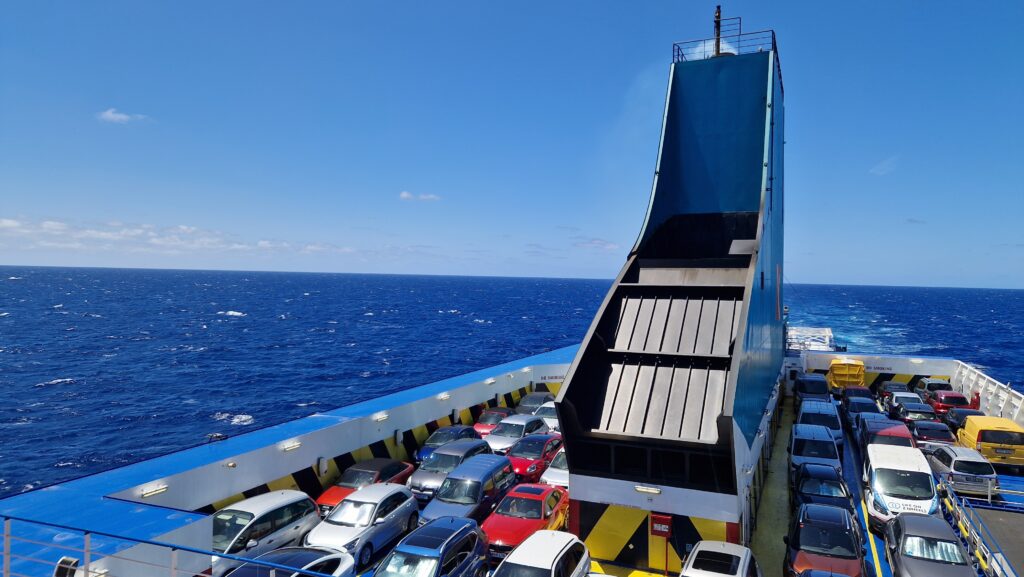
First of all, traveling by ferry allows you to bring your own vehicle – whether it’s a car, van, or even a caravan – and start exploring the island the moment you arrive. It’s also an excellent solution for those who want to travel with their pets without the stress and restrictions of air travel.
And above all, this isn’t just a transfer from point A to point B. If you have an adventurous spirit, the voyage itself can become part of your journey – a slow, scenic transition from the European continent to the subtropical Atlantic.
Here’s everything you need to know about traveling by ferry from mainland Spain to Tenerife – from ticket prices and schedules to what to expect on board.
Main Ferry Routes to Tenerife (2025 Update)
Currently, there are two main ferry routes connecting mainland Spain with the Canary Islands, specifically with Tenerife:
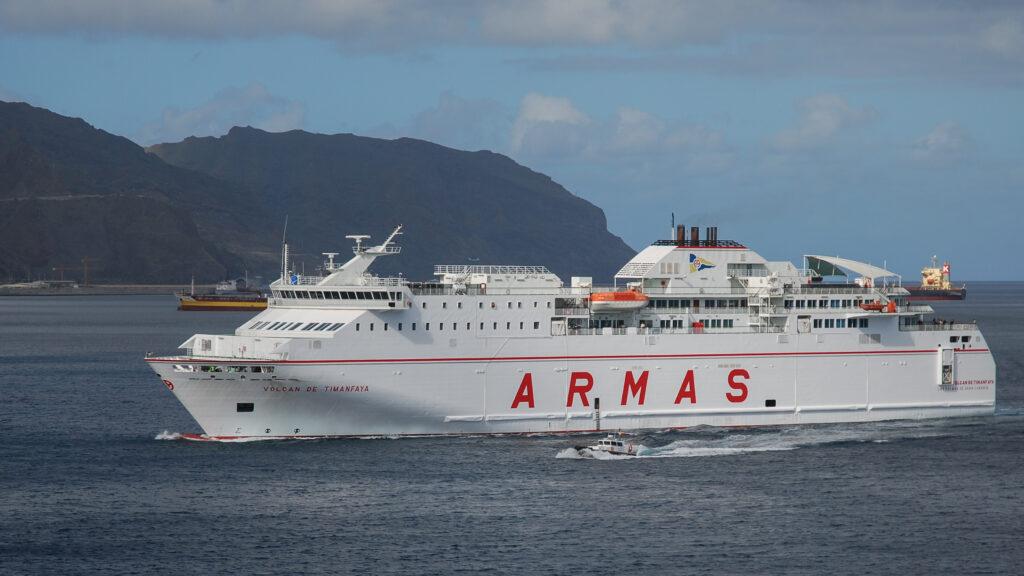
- Cádiz → Santa Cruz de Tenerife (operated by Naviera Armas Trasmediterránea)
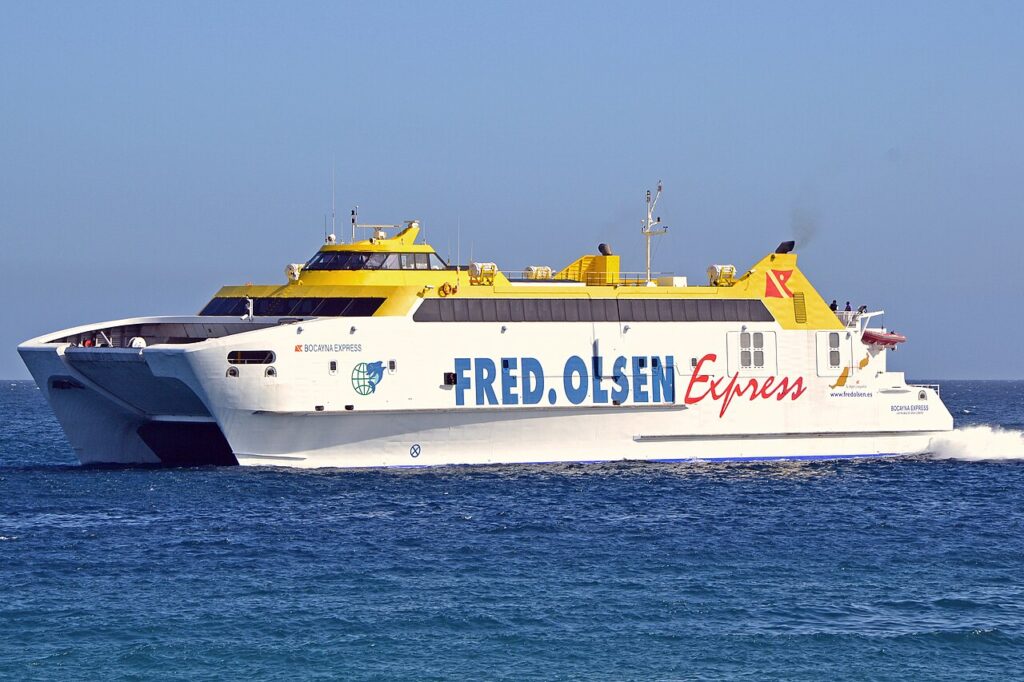
- Huelva → Santa Cruz de Tenerife (operated by Fred Olsen Express)
Each offers a slightly different onboard experience, schedule, and pricing.
Cádiz–Tenerife Route (Naviera Armas Trasmediterránea)
For travelers driving from Central or Eastern Europe, Cádiz might be the more convenient port. Naviera Armas operates roughly two weekly sailings, taking around 38 to 40 hours to reach Tenerife.
- Base fare (foot passenger): from €116
- Price with vehicle: approximately €370 for a standard car (prices are dynamic)
- Accommodation: standard seats, VIP seats, private cabins, some pet-friendly
- Schedule: departs roughly twice per week, varying seasonally
Onboard, you’ll find a restaurant, bar, and sometimes entertainment lounges. Prices fluctuate with season, booking time, and vehicle size, so early booking is highly recommended.
Huelva–Tenerife Route (Fred Olsen Express)
FFred Olsen Express offers a modern and efficient route from Huelva to Santa Cruz de Tenerife, also sailing about twice per week. This route is slightly faster, averaging 36 hours.
- Base fare (foot passenger): from €106
- Price with vehicle: approximately €306 for a standard car (prices are dynamic)
- Accommodation: standard seats, VIP seats, private cabins, some pet-friendly
- Schedule: departs roughly twice per week, varying seasonally
Fred Olsen ships tend to be slightly newer and feature a more premium onboard experience – including an optional Wi-Fi package (from €5) that works reliably even far from shore.
Here’s a side-by-side comparison:
| Feature | Fred Olsen (Huelva–Tenerife) | Naviera Armas (Cádiz–Tenerife) |
| Average Duration | ~36 hours | ~38–40 hours |
| Frequency | 2x per week | 2x per week |
| Base Passenger Price | from €106 | from €116 |
| Price with car | ~€307 | ~€370 |
| Price for cabin | from €557 (with food) | from €454 |
| Wi-Fi | Paid (from €5, works well) | No Wi-Fi |
| Meals | Full-board option €40 | Single meals €9–€15 |
| Pet-Friendly Cabins | Yes | Yes |
All prices shown are as of fall 2025.
What to Expect Before Boarding
Arriving at the port requires punctuality and organization. Travelers are directed into separate lanes based on destination.
For Tenerife, which is usually the last island stop, you’ll typically board first and disembark last – a logistical detail that helps staff manage the multi-island route (Lanzarote and Gran Canaria are earlier stops).
Security checks are thorough. Cars are often inspected, and drug-sniffing dogs may examine vehicles randomly. Even small personal items may be questioned. It’s best not to risk carrying anything suspicious – local police are strict, and fines can be severe.
Life on Board: Facilities and Comfort
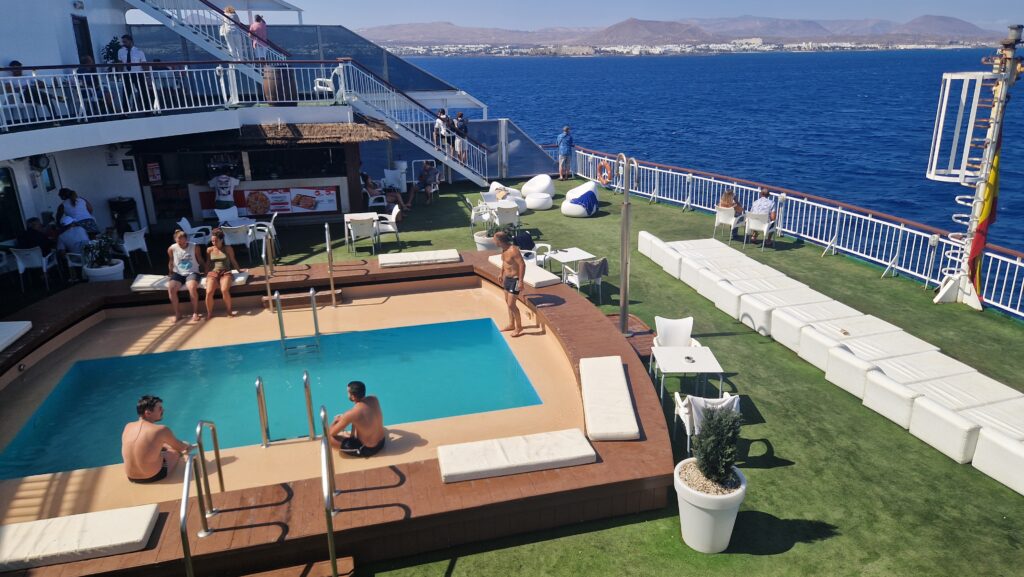
Both ferries feature large indoor lounges, bars, and cafeterias. On some routes, there is also a pool available. Some travelers choose to rest on reclining chairs, while others spread mats or blankets in quiet corners. Cabins, though more expensive, provide real privacy and a good night’s rest – a worthwhile option for longer sailings.
Seats vs Cabins – Which Is Better?
Seats
- Included in the basic ticket price.
- Comfortable enough for daytime travel but less ideal for overnight rest.
- Air-conditioning can make the lounges cold; warm clothing is essential.
Cabins
- Private, lockable rooms similar to small hotel spaces.
- Ideal for families, couples, or those seeking quiet.
- Usually includes bedding and bathroom access.
For overnight comfort, cabins are clearly the best choice, though travelers on a budget are often content with improvised sleeping areas with mats and blankets.
Traveling with Pets
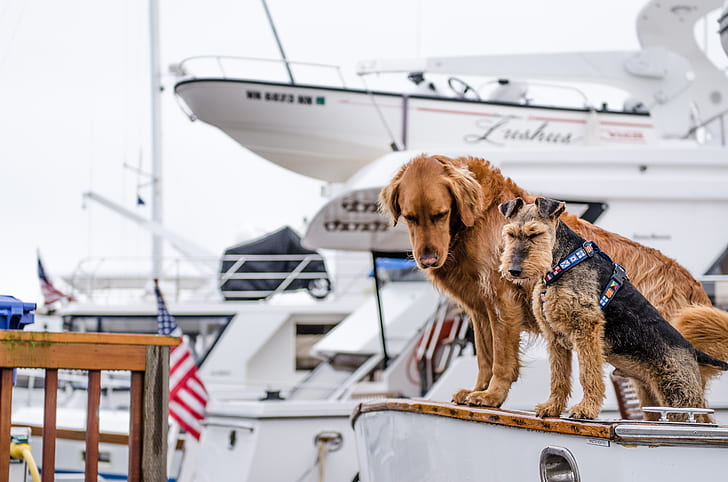
Both Fred Olsen Express and Naviera Armas provide pet-friendly cabins on selected sailings, but their policies and facilities differ slightly depending on the ship and route.
Fred Olsen Express offers several flexible options for traveling with animals:
- Passengers who book a pet-friendly cabin can keep their pets with them throughout the journey.
- Those without a cabin can choose between different solutions: pets may stay inside an approved carrier near the passenger’s seat, in designated pet rooms equipped with individual kennels, or on a mat beside the owner’s seat if allowed.
- The pet rooms include cameras, allowing owners to check on their animals remotely during the trip, and there are specific visiting hours when passengers can enter the area and spend time with their pets.
Naviera Armas Trasmediterránea also allows pets to travel, though the available options depend on the ship and route. Most ferries provide pet-friendly cabins, kennels, or special on-board zones designed for animal comfort and safety. Owners should verify exact conditions at the time of booking, as policies and available spaces can vary.
In both cases, pets must have valid health documentation (EU pet passport, vaccination records) and remain in designated areas for the entire voyage. Booking early is highly recommended, as pet-friendly cabins and kennel spaces tend to sell out quickly.
Food, Internet, and Entertainment
Meals are typically served three times per day and can be purchased in advance or on board. Passengers also have access to vending machines and snack bars.
Meals and Pricing (2025 Rates)
- Fred Olsen Express: full-board option (breakfast, lunch, dinner – excluding drinks) for €40 per person for the entire crossing.
- Naviera Armas: meals sold separately – approximately €15 for a full meal or €9 for a smaller option. Breakfast items are sold à la carte and can total around €10.
Full-board packages on Fred Olsen generally offer better value for longer crossings.
Internet Access and Connectivity
One of the most important things to understand before setting sail is that mobile data does not work in the open ocean. Once the ship leaves the coastal coverage zone, even the best European mobile plans lose signal completely. Travelers should therefore plan to be largely offline during the crossing.
Fred Olsen Express offers a paid Wi-Fi service starting from around €5, which provides reasonably stable connectivity for basic messaging and browsing. While speeds are limited and occasional dropouts occur, it’s sufficient for using social media or sending messages via WhatsApp.
In contrast, Naviera Armas Trasmediterránea does not offer stable onboard internet on this route. Although you can connect to free Wi-Fi on the ship, the connection is very limited and usually does not work during sailing on the open sea. Passengers sometimes manage to send a message via WhatsApp, but usually only when the ship approaches the coast of one of the islands.
Because of this, it’s best to download entertainment, offline maps, and essential travel information before departure. Treat the journey as a rare opportunity to disconnect, enjoy the sea views, and rest before arriving in Tenerife.
Arrival in Tenerife – What Happens Next
Upon arrival in Santa Cruz de Tenerife, disembarkation follows an orderly process. Foot passengers leave first, followed by vehicles in the order they were loaded.
After leaving the ferry terminal, travelers can immediately access the island’s modern road network – the adventure begins as soon as the ramp lowers!
Smart Travel Tips for a Comfortable Ferry Journey
A few thoughtful preparations can make the long Atlantic crossing from mainland Spain to Tenerife much more pleasant. Although the ferries are well equipped, conditions on board can vary, and small comforts go a long way toward improving the experience.
Here’s what we recommend bringing from our experience:
- Warm clothing or a blanket – the air-conditioning runs strong throughout the ship, and temperatures can drop significantly at night.
- A small toiletry bag and towel – useful for freshening up, especially if you don’t have a cabin.
- Snacks and bottled water – to supplement onboard meals and avoid late-night hunger.
- A sleeping mat or travel pillow – ideal for passengers with seat-only tickets who want to rest more comfortably.
- Entertainment – books, podcasts, or downloaded films help pass the long hours offline.
- Earplugs and an eye mask – essential for blocking light and noise in shared lounges.
It’s also worth remembering that access to parked vehicles is limited or completely restricted during the voyage, depending on the ferry company. Anything needed during the trip – from personal items to medication – should be taken out of the car before boarding.
With a bit of preparation, the ferry crossing becomes less of a challenge and more of a memorable part of the journey to Tenerife.
Frequently Asked Questions (FAQ)
How long does the ferry from mainland Spain to Tenerife take?
Between 36 and 40 hours, depending on route and weather conditions.
How much does it cost?
Base fares start at €106–€116 for foot passengers. Bringing a vehicle costs roughly €370, depending on size and season.
Can I bring my car or caravan?
Yes, both routes allow private vehicles, though caravans must comply with length and weight limits.
Are there cabins on board?
Yes. Both companies offer private cabins, including pet-friendly options.
Is Wi-Fi available?
Mobile data does not work once the ferry is on the open ocean. Fred Olsen Express offers a paid Wi-Fi service that works reasonably well for basic messaging and browsing, though speed and connection may vary. Naviera Armas Trasmediterránea, however, does not provide reliable internet access, so passengers on that route should expect to be completely offline during the crossing.
Are meals included?
Not usually. Meals can be purchased separately or as a full-board package, depending on the operator.